

Animals, Plants & Seasons 3-minute video · ages 4-8 · free coloring page
Why don't spiders get stuck in their own webs?
A spiderweb is sticky, so it can catch flies. But the spider runs all over it, and never gets stuck. How does the spider do that?
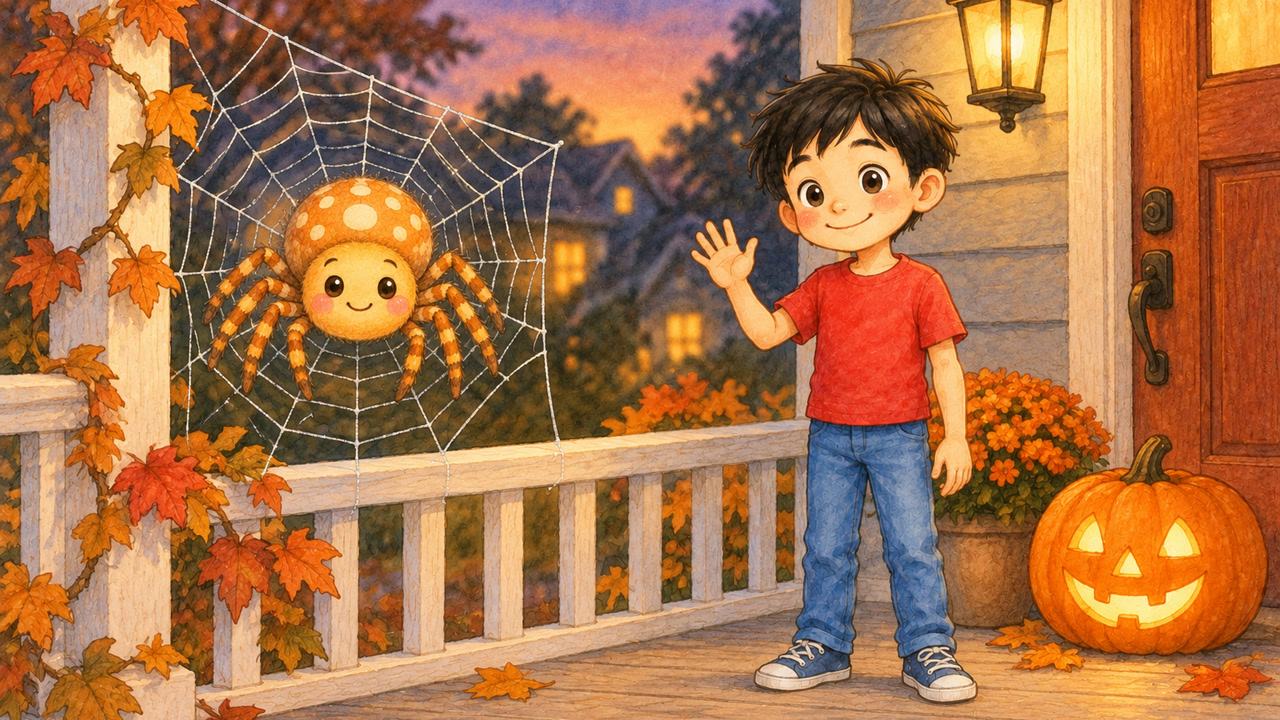 3 min
If the video does not start, use the YouTube button.
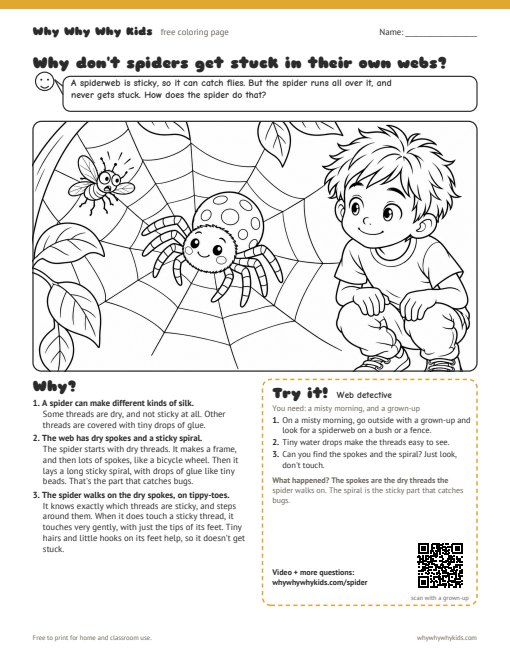
Print, color, try
Free coloring page
The scene from the video as a coloring page, plus the three-sentence answer, the experiment, and a QR code back to this page. One sheet, US Letter, black and white.
The answer in three parts
Why?
-
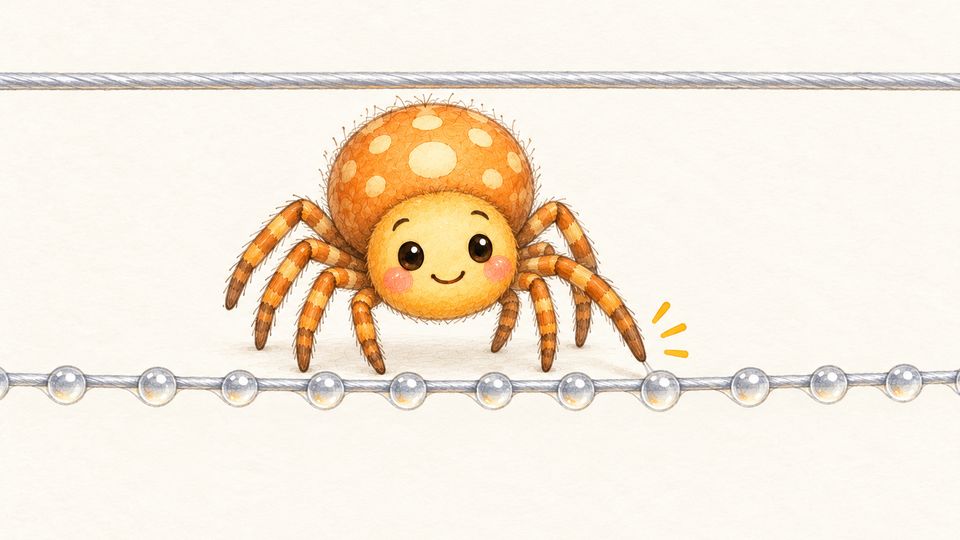
A spider can make different kinds of silk.
Some threads are dry, and not sticky at all. Other threads are covered with tiny drops of glue.
-
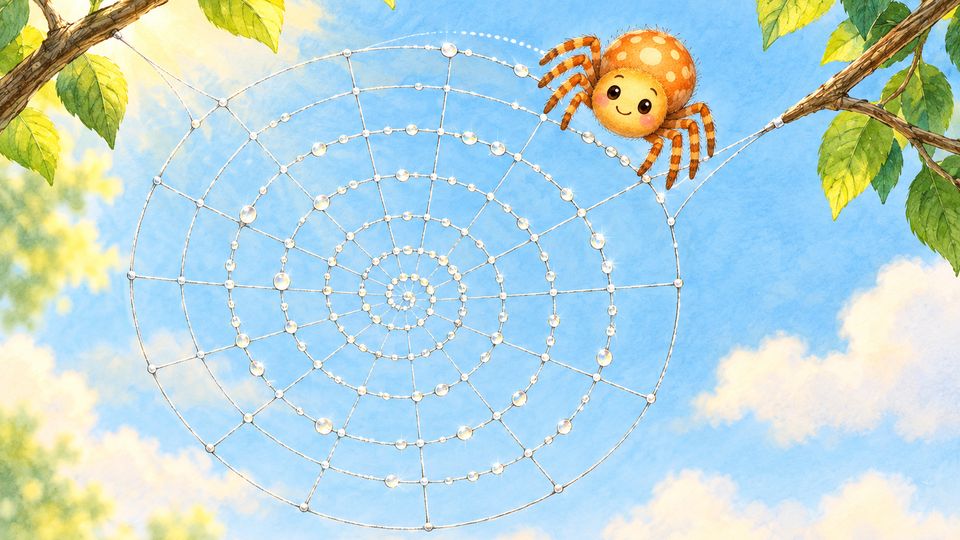
The web has dry spokes and a sticky spiral.
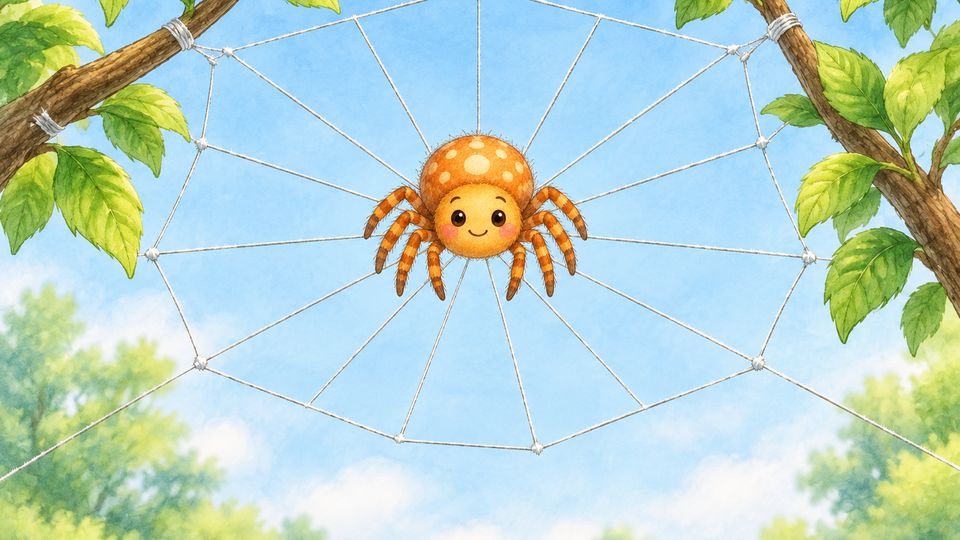
The spider starts with dry threads. It makes a frame, and then lots of spokes, like a bicycle wheel. Then it lays a long sticky spiral, with drops of glue like tiny beads. That's the part that catches bugs.
-
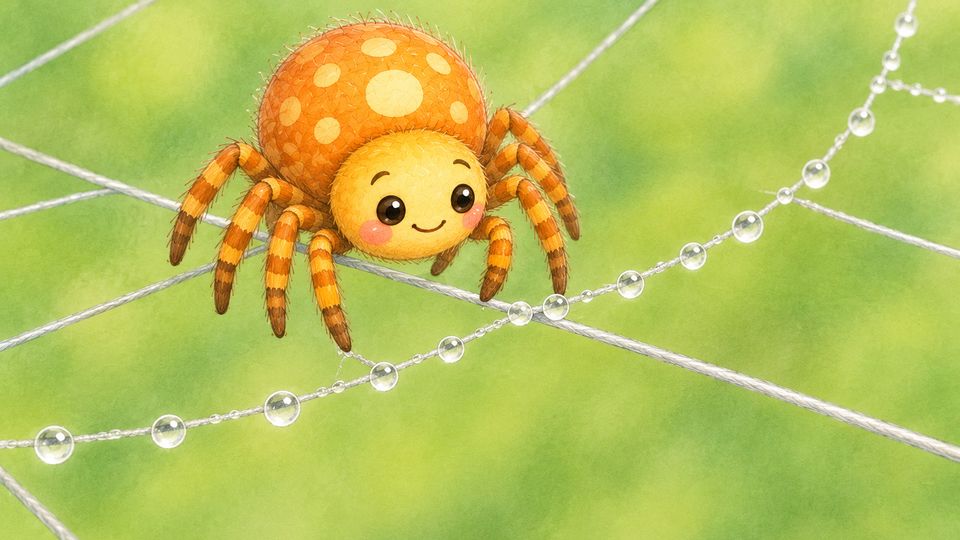
The spider walks on the dry spokes, on tippy-toes.
It knows exactly which threads are sticky, and steps around them. When it does touch a sticky thread, it touches very gently, with just the tips of its feet. Tiny hairs and little hooks on its feet help, so it doesn't get stuck.
For grown-ups: A spider makes its silk itself. It keeps runny liquid silk inside its body, which comes out of tiny tubes called spinnerets. As the spider pulls it out, it turns into a thin, strong thread: for its size, as strong as steel, and very stretchy too. When a fly bumps into the sticky spiral, the whole web shakes, and the spider feels the shaking with its legs.
How a web gets made
- Framedry threads
- Spokesdry
- Sticky spiraldrops of glue like tiny beads
- Dinner!the web shakes
A tiny experiment
Try it!
Web detective
You need: a misty morning, and a grown-up
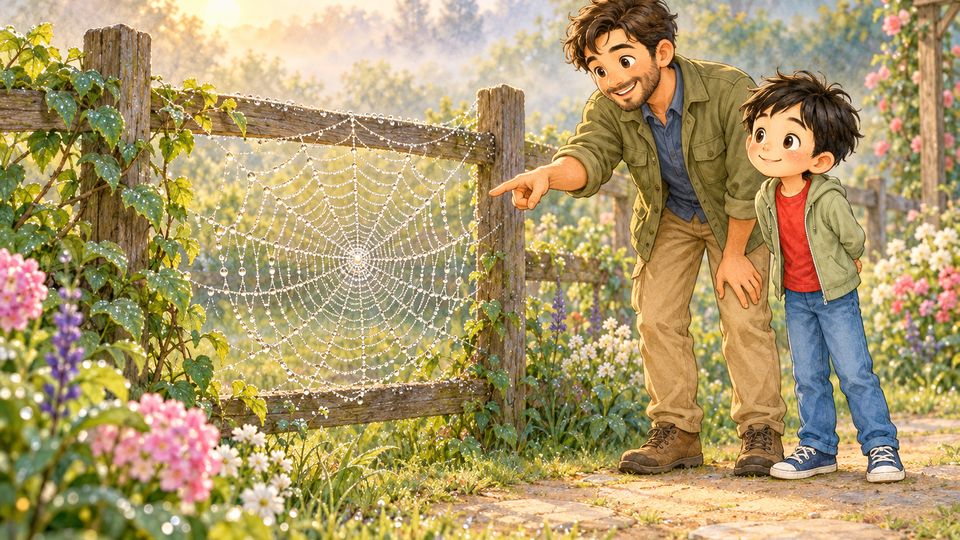
- On a misty morning, go outside with a grown-up and look for a spiderweb on a bush or a fence.
- Tiny water drops make the threads easy to see.
- Can you find the spokes and the spiral? Just look, don't touch.
What happened? The spokes are the dry threads the spider walks on. The spiral is the sticky part that catches bugs.
Did you know?
Many garden spiders eat their old web and spin a brand new one, often every single day. They recycle their silk!
Spiders are helpers. They catch flies, mosquitoes and other bugs. Most spiders are harmless to people, but it's still best to just watch, and not touch.
Your guide in this video
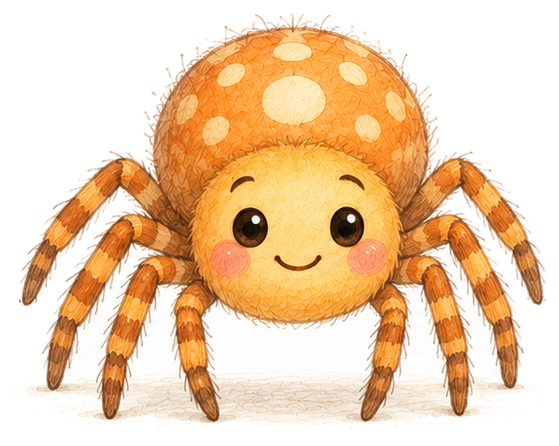
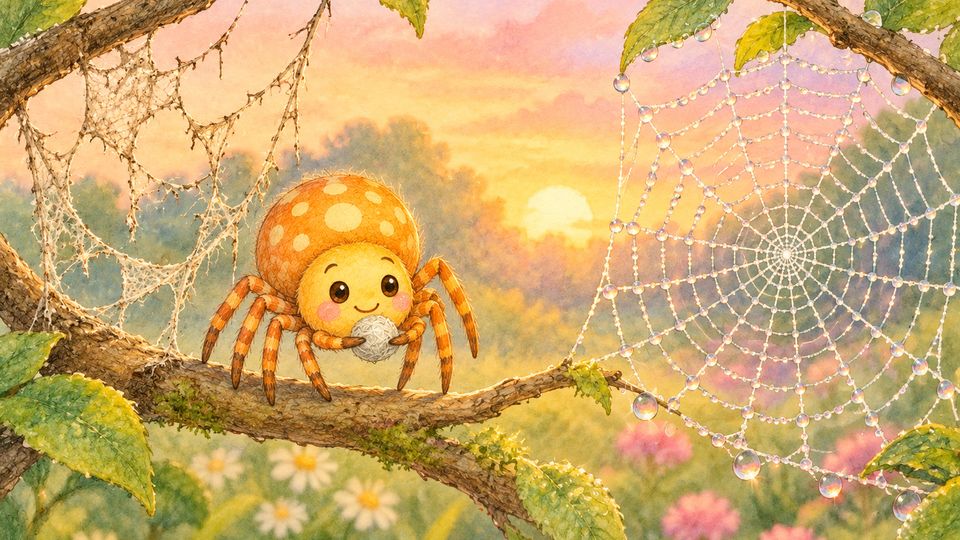
I'm Webby, a little garden spider. Do you want to know my sticky secret?
Webby is an orange-and-yellow garden spider with cream dots and eight striped legs.
Keep asking
Next question
Animals, Plants & Seasons
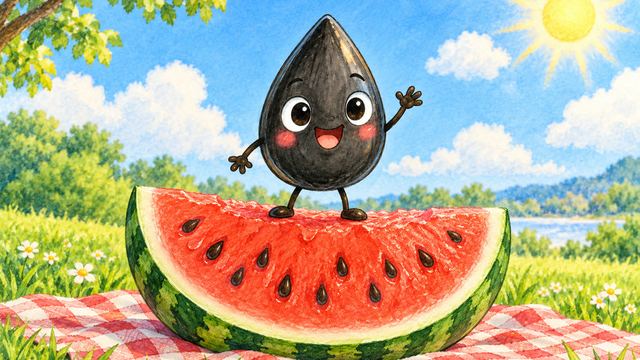
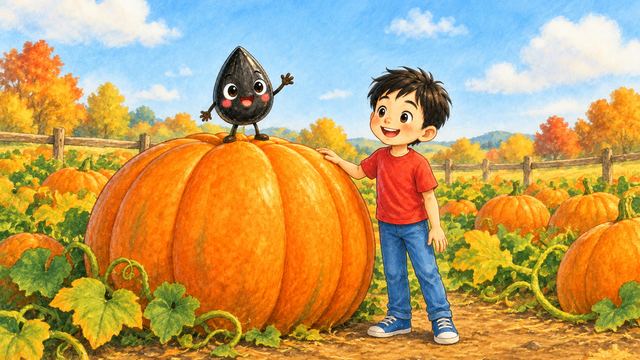
Will a watermelon grow in your tummy if you swallow a seed?
with Seedy · 2 min
More from Animals, Plants & Seasons
For grown-ups
Our videos are made for kids and play on YouTube. If your child watches in the YouTube Kids app with "approved content only", you can add our channel in three steps. See how.
No ads, no sign-up, no cookies, no tracking.